
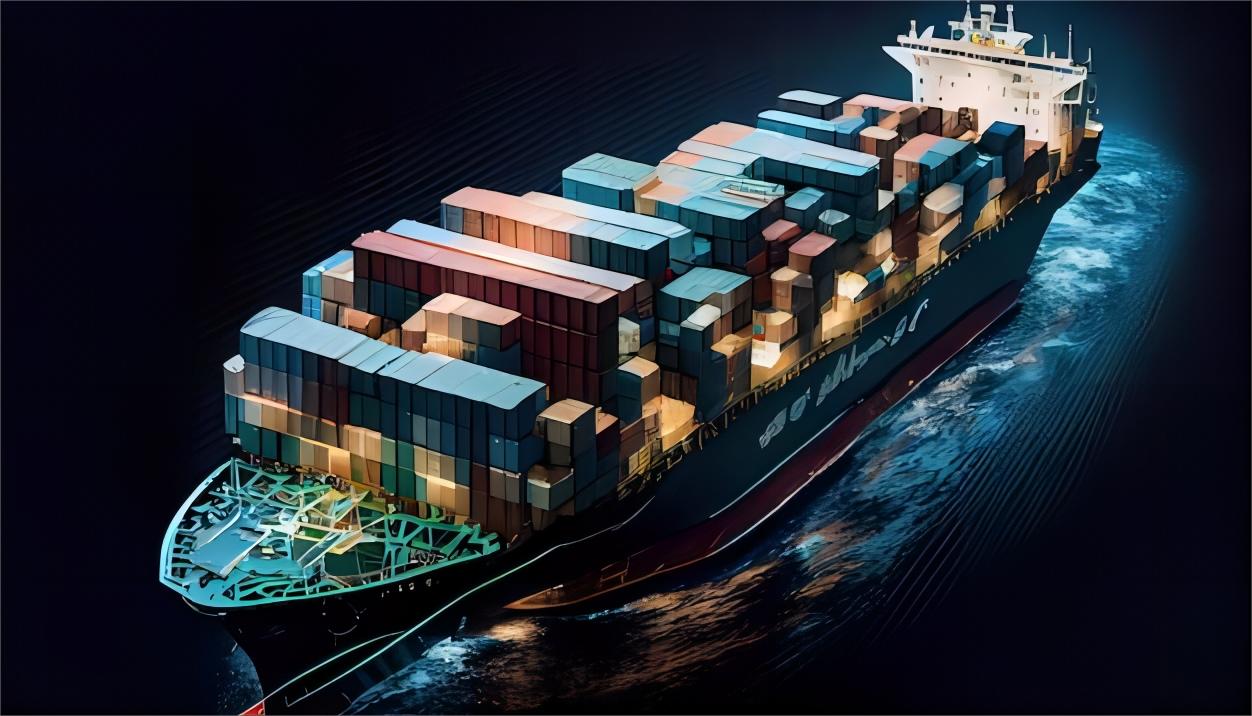
3PL Provider for Ecommerce Canada: 2026 Logistics Guide
Tight cargo-ready windows demand clearer sequencing when arranging 3pl Provider for Ecommerce Canada without a validated booking path. Late document packs and unconfirmed intake slots often push cargo past the only workable sailing or flight window. chinabestforwarder provides scoped booking support so readiness dates and cut-offs stay synchronized. This 2026 guide details booking checkpoints and execution benchmarks for auditable corridor decisions.
Key Takeaways
A standard 40HQ container provides approximately 68-76 CBM of usable space, while a 20GP container is limited to 26-28 CBM.
Air freight chargeable weight is determined by the greater of actual weight or volumetric weight calculated at 167kg per CBM.
Canada-bound commercial invoices must be filed accurately at least 48 hours prior to vessel departure to avoid customs hold penalties.
Peak season surcharges often add 15-25% to base spot rates between September and December due to restricted port capacity.
Direct door-to-door transit for ocean freight typically ranges from 25 to 35 days, contingent on final destination rail connections.
When Should You Seek Professional Logistics Assistance?
You should transition to a professional 3PL provider for ecommerce Canada when your monthly shipping volume exceeds 5 CBM or when managing multiple suppliers becomes a barrier to growth.
Scaling an ecommerce business requires more than just moving goods; it demands precise inventory management and local compliance expertise. As your order frequency increases, the administrative burden of coordinating individual freight legs can lead to lost revenue and customer dissatisfaction.
Integrating with a professional partner allows you to leverage door to door solutions, effectively removing the complexity of managing separate carrier and customs relationships.
Common mistake: Attempting to manage complex multi-supplier consolidation in-house without a centralized WMS.
Risk alert: Failure to scale logistics management leads to significant stockouts and inventory carrying costs.
Which Freight and Fulfillment Options Should You Compare First?
Compare options based on total landed cost and speed, prioritizing providers that offer integrated Amazon FBA support if your primary sales channel is marketplace-based.
Your initial comparison should focus on the transparency of the pricing structure and the provider's ability to handle specific labeling and packaging requirements for Canadian distribution centers.
Furthermore, examine the provider's network depth to ensure they can manage both the international mainhaul and the final mile delivery safely.
| Accessorial Charge | Standard Free Window | Typical USD Band | Trigger Condition |
|---|---|---|---|
| Driver detention | First 2 hours free | $75 – $120 / hour | Dock dwell past free window |
| Border layover surcharge | Same-day clearance | $350 – $600 / night | Secondary exam / bad e-Manifest |
| Liftgate / inside delivery | Dock-to-dock standard | $125 – $250 / service | No commercial loading dock |
| Pallet restrap & re-wrap | Origin inspected | $30 – $60 / pallet | Shift or damaged wrap at cross-dock |
Common mistake: Comparing only base freight rates while ignoring terminal handling and storage fees.
Risk alert: Missing documentation or inaccurate shipping marks at CFS intake triggers mandatory export holds.
How Do FCL, LCL, and Express Services Differ for Your Cargo?
FCL offers the most cost-effective solution for high-volume inventory, whereas LCL is ideal for smaller shipments, and express service is reserved for critical stock replenishment.
FCL (Full Container Load) provides dedicated space, reducing the risk of cargo damage and speeding up unloading processes at the destination. In contrast, LCL (Less than Container Load) consolidates your goods with other shippers, which is economical but extends transit times due to stuffing and destuffing at the CFS.
Express services utilize air networks to bypass the long transit times associated with maritime routes, providing a reliable buffer for inventory shortages.
| Mode | Transit (days) | Cut-off focus | Best for |
|---|---|---|---|
| Ocean LCL / CFS | 28–42 | CFS receiving | Multi-supplier cargo |
| Ocean FCL buy-out | 22–35 | CY gate-in | >15 CBM |
| Air freight | 3–8 | Airline cut-off | Urgent replenishment |
| Sea-air hybrid | 12–20 | Mode switch | Balanced cost/speed |
Common mistake: Choosing LCL for shipments approaching 15 CBM, where the cost difference to FCL is negligible.
Risk alert: Late supplier CRDs past CFS receiving force split shipments and storage fees.
What Timeline Should You Expect from Pickup to Final Delivery?
You should expect a standard ocean transit of 25-35 days from major Chinese ports to Canadian gateways, with an additional 5-10 days for customs clearance and final inland transport.
These timelines are highly dependent on the efficiency of your chosen customs brokerage partner and the current congestion levels at ports like Vancouver or Montreal.
Always build a 10-day buffer into your procurement schedule to account for potential peak season delays or inspection holds.
Common mistake: Ignoring the dwell time required for container drayage once the vessel has docked.
Risk alert: Destination CFS free dwell is often only 3–5 days—unclaimed LCL accrues fast.
How Are Landed Costs and Service Fees Typically Structured?
Landed costs comprise the base freight rate, terminal handling charges, duty, taxes, and final-mile delivery fees, which should all be itemized in your quote.
A transparent 3PL provider will differentiate between the 'all-in' ocean or air rate and destination-specific surcharges like port congestion fees or chassis usage.
Understanding these components is vital to avoiding 'invoice shock' upon the arrival of your cargo in Canada.
Field note: Always clarify if duties are included or billed separately at the time of entry.
Common mistake: Assuming the quote includes all destination duties and taxes without verification.
Risk alert: Hidden destination fees can inflate total costs by 20% if not disclosed upfront.
Which Documents and Compliance Checks Are Required?
Mandatory documentation includes a detailed Commercial Invoice, a precise Packing List, and the transport document, such as an Ocean Bill of Lading or an Air Waybill.
Compliance with Canadian import regulations requires accurate HTS classification for every item to ensure the correct duty assessment.
Incomplete documentation is the leading cause of customs delays, often resulting in significant storage and demurrage fees.
Field note: Ensure your HTS codes match the Canadian Customs Tariff to avoid audit penalties.
Common mistake: Using a vague description of goods on the invoice instead of individual itemized descriptions.
Risk alert: Missing documentation or inaccurate shipping marks at CFS intake triggers mandatory export holds.
How Do Peak Seasons and Capacity Changes Affect Your Plan?
Peak seasons, typically spanning from late August to December, cause significant capacity constraints that often lead to base rate increases of 20% or more.
During these periods, booking lead times should be extended by at least 14 days to ensure your cargo secures space on the desired vessel or flight.
Proactive planning and securing space allocations early are the only ways to mitigate the impact of reduced carrier capacity.
Field note: Utilize North America shipping corridors early to avoid the Q4 rush.
Common mistake: Waiting until the last minute to book during the peak season, resulting in 'rolling' of containers.
Risk alert: Late supplier CRDs past CFS receiving force split shipments and storage fees.
What Is the Step-by-Step Process from First Quote to Delivery?
The process begins with an inquiry followed by a detailed review of your cargo specifications, ensuring that the logistics strategy aligns with your delivery expectations.
Once the quote is approved, we coordinate the pickup from your factory, manage the export documentation, and oversee the mainhaul transit.
Finally, we handle the destination customs clearance and coordinate the final delivery to your warehouse or specified distribution point.
Field note: Communication is key at each stage of the transit to ensure all parties are updated.
Common mistake: Neglecting to provide clear destination delivery instructions until the vessel has already docked.
Risk alert: Destination CFS free dwell is often only 3–5 days—unclaimed LCL accrues fast.
Decision Framework
By volume: Capture CBM/kg first; under ~2 CBM often fits express/air, mid volumes need LCL/FCL comparison, and oversized lots require dedicated equipment quotes.
By speed: Urgent windows under ~7 days favor air/express; standard replenishment can use ocean or multimodal once cargo-ready timing is locked.
By cargo profile: Flag DG, temperature-control, or oversized handling before award—these change both documentation and carrier acceptance paths.
Execution Checklist for 3pl Provider for Ecommerce Canada
Treat 3pl Provider for Ecommerce Canada as a scoped booking problem: profile, mode, compliance, then space.
Keep fee exclusions and cut-offs written before award to avoid post-arrival surprises on 3pl for Ecommerce Canada.
Process and Checkpoints
Shipment Profile Capture
Confirm cargo-ready date, CBM/weight, commodity, HS code, and Incoterms.
Mode & Service Scope Selection
Compare air / LCL / FCL (or specialty) against transit and landed-cost targets.
Documentation & Compliance Gate
Align commercial invoice, packing list, and any specialty filings before booking.
Space Booking & Cut-off Lock
Reserve carrier/co-loader space and confirm export cut-off windows in writing.
Mainhaul & Milestone Tracking
Monitor departure, arrival, and exception alerts against the awarded transit plan.
Destination Release & Delivery
Clear destination formalities and complete final-mile delivery to the agreed door.
Confirm the right route for your shipment
Ready for a scoped proposal on 3pl Provider for Ecommerce Canada? Share origin/destination, cargo-ready date, CBM/weight, commodity, and Incoterms.
Request a route reviewFrequently Asked Questions
How does the 1:167 volumetric ratio affect LCL freight invoices?
Carriers bill the greater of actual weight or volumetric weight using about 167 kg per CBM. Light cartons often pay on volume.
What happens if supplier cargo arrives after the CFS consolidation cut-off?
Late lots are typically rolled to the next consolidation cycle, accruing storage and risking split shipments.
How can multi-supplier shippers prevent CFS dead-space penalties during consolidation?
Declare stackability, use ISPM-15 pallets, and share carton dimensions early so CFS can plan density.
Which shipping marks must match the house Bill of Lading for LCL cargo?
Carton and pallet marks must match the house B/L description exactly to avoid relabel fees.
When should buyers switch from CFS LCL to a dedicated FCL buy-out?
Around 15 CBM and above, an FCL buy-out often beats shared CFS unit costs—especially with non-stackable freight.
Where does the forwarder take custody of multi-supplier cargo at origin?
Custody usually transfers at CFS receiving after piece count and mark checks.
Rates and surcharges are subject to fluctuation; please request an itemized quote for accurate pricing.
This guide is for informational purposes only and does not constitute formal legal, tax, or customs advice.
Benchmarks provided reflect standard 2026 industry practices for the China-Canada trade lane.